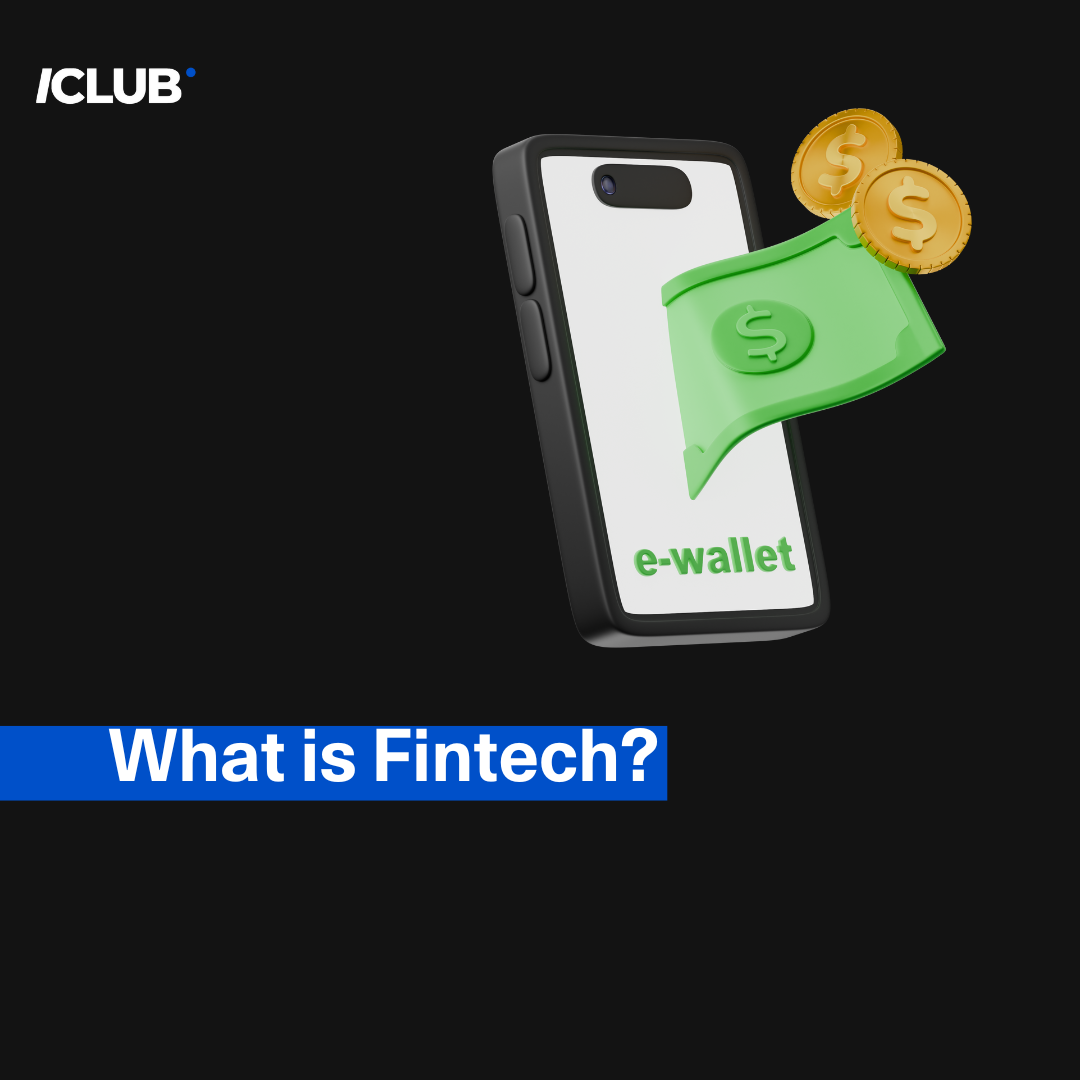
Financial technology, or 'FinTech,' is a sector that is transforming our understanding of how money works. Whereas you previously had to visit a bank branch, fill out paperwork and wait for a response to open an account, today the entire process can be completed in minutes on your smartphone.
Examples of successful FinTech companies include:
- Revolut: A platform combining banking, currency exchange, investing, cryptocurrencies and budgeting.
- PayPal: An international electronic payment system that allows you to make online money transfers, pay for purchases on the internet, and accept payments without having to enter your bank details every time.
- Wise: An international fintech company that provides money transfer services and multi-currency accounts for individuals and businesses. It once called into question the very essence of cross-border bank transfers. While traditional banks could charge hidden fees for international transfers, Wise made them transparent, inexpensive and quick.
- Binance: One of the world's largest cryptocurrency exchanges, allowing users to buy, sell, exchange and store cryptocurrencies.
- Stripe is a fintech company that provides infrastructure for online payments. It enables businesses of all sizes to accept online payments, issue invoices and subscriptions, process transactions, and automate financial processes. Stripe has made accepting online payments so straightforward that they can be integrated with just a few lines of code.
According to the latest available data, global investment in fintech exceeded $28 bn in 2024. The areas receiving the most funding are digital payments, cybersecurity, artificial intelligence in finance, cryptocurrencies and regulatory technology (RegTech).
This indicates that FinTech has become an integral part of the global financial system and is no longer a niche area.
Fundamentals, goals, and objectives of fintech
To better understand fintech, let's break it down into three key aspects.
The basics
FinTech cannot be imagined without an innovative technological base. It is the tools that were once experimental and expensive that have opened the door to a new financial reality. FinTech is based on several key technologies that determine its power, flexibility, and speed of development.
Artificial intelligence (AI)
AI has become the foundation of analytics, decision automation and service personalisation. Banks and FinTech companies use AI to assess creditworthiness, detect fraudulent transactions, provide investment advice and optimise customer service through chatbots. AI enables real-time analysis of customer behaviour and the generation of personalised offers.
Blockchain
Blockchain is a new paradigm for storing and transferring data without intermediaries. In fintech, it enables transparent payment systems, smart contracts for automatic transactions and tokenised assets for investment. Decentralisation means that trust in transactions is formed through mathematical logic and transparent code.
Mobile applications
Mobile interfaces have transformed complex banking procedures into simple, quick processes. Thanks to modern technology, you can now open an account, invest, obtain a loan or apply for insurance from the comfort of your own home. Nowadays, a fintech product without a mobile app is not considered adequate.
Cloud computing
Cloud computing has enabled fintech startups to avoid the costs of setting up the infrastructure. Rather than creating their own servers, companies can host their platforms in the cloud, giving them scalability and flexibility, as well as the ability to quickly launch new features. Without the cloud, fintech would not exist in its current form — it has played a crucial role in lowering the barrier to market entry.
Biometrics
In an era when logins and passwords no longer guarantee protection, biometrics provide security. Fingerprint, facial, or voice recognition verification enables quick and reliable authorisation in financial applications.
Big data
Big data makes it possible to work with millions of transactions, customer profiles, and behavioural patterns. Thanks to big data analytics, fintech companies can better understand their users, predict risks, optimise products and discover new development opportunities.
Each of these technologies is just a tool. However, when combined in a fintech product, they create a new level of financial experience that is accessible and simple, yet technically complex.
Goals
Accessibility and speed
The first and most obvious goal is to make financial services accessible at any time and from anywhere. In the past, opening an account or applying for a loan could take days or even weeks. Today, it takes minutes. Fintech eliminates geographical and temporal barriers because all you need is a smartphone and an internet connection.
This is extremely important for the millions of people in countries without extensive banking infrastructures. A mobile app turns your phone into a bank. For small businesses, it also means fast financing, payment acceptance tools, tax accounting and CRM all in one place. There is no paperwork, no queuing and no wasted time.
The democratisation of finance
Another strategic goal of fintech is to make the financial system more equitable. Traditionally, access to quality financial products was often limited to those with connections, a stable income or a perfect credit history. Fintech is changing this.
Nowadays, you can invest with just a few dollars, set up your fund through crowdfunding, or obtain a microloan via a decentralised platform. Rather than a centralised system serving the select few, a model is emerging in which everyone has the right and opportunity to participate, regardless of their wealth, country of residence, or previous experience.
New business models
FinTech is creating entirely new ways of interacting with money. Crowdfunding is one such model, where capital is raised from numerous people, bypassing traditional investors or banks.
Another example is peer-to-peer (P2P) financing, where people lend money to each other directly via special platforms, bypassing banks and intermediaries. This model is useful for those who do not meet traditional lending requirements but are reliable payers.
The next level is the crypto economy, which enables new markets and infrastructures to be created where financial transactions take place through algorithms instead of institutions. Smart contracts, decentralised exchanges and asset tokenisation are already in operation in the real economy.
Tasks
While the goals of fintech represent directions for development, the tasks represent the specific steps that need to be taken to improve the financial system. Startups and investments focus on these tasks.
Internet banking in remote regions
One of the main problems with traditional financial infrastructure is that it is inaccessible in rural areas, mountainous regions and developing countries. Where there are no bank branches or ATMs, financial services are virtually non-existent. Fintech's task is to change this.
Mobile banking solutions based on straightforward apps allow people, even those in the most remote areas, to open accounts, store funds, pay utility bills and receive social benefits.
Reducing fees for international transfers is another challenge
Another challenge is eliminating excessive fees for international transactions. Many migrants, freelancers and small businesses are faced with losing up to 10% of the transfer amount in bank fees.
Modern fintech solutions allow funds to be transferred abroad almost instantly and at a minimal cost (or even for free). This has enormous potential benefits for both private users and the global economy: small businesses can work with foreign clients without losing profits on transfers.
Simplifying investment for beginners
Traditionally, investing has been considered a complex business, accessible only to professionals or wealthy individuals. The task of fintech is to make investing understandable and accessible to everyone. Thanks to user-friendly platforms such as Robinhood and eToro, beginners can start investing with minimal amounts.
Protection against fraud
Fintech companies are implementing multifactor authentication, facial recognition and real-time transaction monitoring. Security is becoming part of the user experience rather than a burden. This is crucial for fostering trust in digital finance, particularly among novices.
Key Fintech verticals
There are five key verticals in the fintech market today.
Payments and e-wallets
This is the direction in which most fintech revolutions have started. Its essence is to make payments fast, cheap and convenient.
Remember how you used to have to go to the bank to make a transfer? Now you can do it in two clicks via a mobile app. Electronic wallets allow you to store cards, cryptocurrency, and rewards — all in one interface.
Examples: PayPal, Stripe, Apple Pay, Google Pay, Wise (formerly TransferWise).
Neobanking
These are banks without physical branches that operate entirely online. This space is actively developing in countries with young digital populations and underdeveloped banking infrastructure.
Examples: Revolut, Monobank.
Online lending and microfinance
Online lending solves the problem of access to finance for millions of people. Scoring based on smartphone or social media data allows companies to lend to people with no credit history.
Formats: Online microloans (payday loans), P2P lending (people lending directly to people) and BNPL (buy now, pay later).
Investment platforms and WealthTech
A combination of finance and technology in the areas of wealth management, investing and financial planning.
Such services provide access to stock markets with minimum investments (from $1), automatically build portfolios according to the user's risk profile, and explain investments in plain language.
Examples include Robinhood and eToro.
RegTech and cybersecurity
These are technologies that automate compliance with financial regulations and laws. In a world where fraud and financial crime are becoming increasingly sophisticated, cybersecurity is not an option but a must.
Such companies streamline KYC/AML checks, detect suspicious transactions in real time and protect user data at all stages.
Tech behind Fintech
Fintech only seems simple. But behind the scenes of convenient apps and instant transfers lies a complex infrastructure. Creating even the simplest financial service requires a combination of high technology, security, and fast data processing.
Artificial intelligence (AI) and machine learning (ML)
Artificial intelligence is the ability of a computer to think and learn, while machine learning is the process by which it does so.
Algorithms analyse large amounts of data, find patterns and make decisions without human input. The more data, the more accurate the predictions.
With their help, fintech is creating low-bureaucracy credit scoring, smart investment platforms and advanced systems to fight fraud.
Big data
Big data is huge amounts of information that are too large and complex to be processed using traditional methods.
Systems collect information from many sources: transactions, application behaviour, social networks, and even locations, which are then analysed.
Fintech uses it to create personalised products (recommendations, customised tariffs), predict customers' financial habits and needs, identify anomalies and fraud, and better understand the market to make investment decisions.
Cybersecurity
Cybersecurity is the protection of information, systems, and funds from unauthorised access.
It consists of data encryption (in-transit and server protection), multifactor authentication (MFA), biometrics (fingerprints, facial recognition), and API and network protection.
This allows fintechs to build security into all their operations, monitor them in real time and automatically block suspicious activity.
APIs and Open Banking Platforms
APIs are software 'bridges' that allow different services to exchange data. Open Banking is a concept where banks open up their APIs to third-party companies.
If the user agrees, their data becomes available to the service, opening up new possibilities. For example, a mobile app can see the user's spending and offer ways to optimise the budget.
In this way, fintech facilitates integration with banks, the development of ecosystems (financial applications that work together) and creates competition for a service rather than 'access to an account'.
How exactly is fintech improving financial services?
Let's have a look at exactly how fintech is changing the rules of the game, from bank accounts and insurance to credit and even personal finance management.
Speed and convenience
One of the biggest benefits of fintech is instant access to financial services. Thanks to mobile apps and automated processes, a user can open an account in 5 minutes without queuing at a bank, transfer money instantly to another country or get a loan within minutes of applying online.
This is made possible by the use of cloud technology, APIs, electronic identification and digital signatures.
Personalisation
Fintech services use artificial intelligence and big data analytics to better understand their users. This allows them to offer only relevant financial products, remind them of upcoming payments and create personalised savings plans.
Apps such as Monzo or Revolut, for example, automatically categorise spending, show analytics and even help you budget. This turns passive services into active financial assistants.
Improved security
Security is a critical element in the financial sector. Fintech companies are implementing the latest protective systems such as two-factor authentication, biometrics (Face ID, Touch ID), behavioural analytics (fraud detection) and data encryption.
They act not only as 'digital locks' but also as intelligent security guards. Potential threats are monitored in real time.
Accessibility to a wider range of people
Fintech is also opening up financial services to those who were previously outside the system: the unbanked, the self-employed, migrants or small businesses.
For example, alternative scoring allows people to get a loan without a traditional credit history, and it is possible to use neobanking even if there is no developed banking infrastructure in the country.
This creates new markets and has a social impact, bringing more people into the economy.
Reducing the cost of services
Automation, lack of branches and lower operating costs allow fintech companies to offer lower rates. For example, free international money transfers (Wise), cheaper loans (Upstart) and free investing (Robinhood).
This creates healthy competition, forcing even big banks to improve.
Risks and challenges of fintech
Behind the convenient apps, smart investment platforms and digital banks lie opportunities as well as serious challenges.
Regulatory uncertainty
Startups are accustomed to operating with a ‘fast and furious’ approach. However, when it comes to financial services, this strategy is not always effective. Regulatory uncertainty is one of the biggest threats to new players because the sector is developing faster than legislation can respond. This creates difficult conditions for innovation.
Unlike banks, which operate under clear rules, FinTech often has to engage in a 'grey area'. What, for example, should be done about crypto platforms that behave like exchanges but do not have a licence? How should credit services that use AI be regulated? Legislators tend to lag, forcing startups to take risks.
This is where the concept of a 'regulatory sandbox' comes in — a special space where companies can test new financial products under supervision, without taking on full responsibility. This allows innovations to be launched under limited conditions while the state determines their suitability for the market.
Conversely, there are also cases where the state actively intervenes in fintech services. The story of China's Ant Group, a subsidiary of Alibaba that operates the Alipay platform, is an example of regulatory uncertainty. In 2020, Ant planned to hold an IPO, but the Chinese authorities suddenly halted the process.
One reason for this was that the Ant Group provided microloans via a mobile app with insufficient oversight from the banking regulator. Although the company was not formally a bank, it operated with huge volumes of loans, mainly through partner banks. The Chinese authorities' decision to suspend the IPO was also influenced by Ant Group founder Jack Ma's criticism of China's banking system and regulators, which drew attention to the company.
Cybersecurity
Fintech works with money, personal data and bank accounts. As a result, these services are a prime target for cybercriminals.
For example, data leakage or customer fraud, service disruption and theft of funds are all possible. For fintech, security is not a feature, but a condition of existence.
Dependence on algorithms and AI
Many fintech products rely on artificial intelligence to make decisions. This creates the conditions for specific risks.
- Black box — users (and even developers) don't always understand exactly how the algorithm works.
- Bias — the algorithm may learn to discriminate against certain groups (e.g. by gender, race, or region).
- Insufficient data — in new markets or unusual situations, AI may make incorrect recommendations.
An unsupervised algorithm is a potential source of discrimination, error, and loss.
Business model instability
Venture investors often view the innovations of FinTech startups as an opportunity to change the rules of the game and earn 3-10x returns. However, such business models still have a fragile structure and have not stood the test of time. In 2021, Revolut reached an important milestone by making a profit for the first time. Revenue growth to £636 million made a profit of £26 million ($39 million) possible.
However, by 2022, the situation had changed. The company recorded a loss of £25.4 million due to a significant increase in expenses, particularly for personnel, marketing, and new product launches.
User distrust
When FTX appeared to be one of the most successful cryptocurrency exchanges, few people anticipated that its collapse would deal the fintech industry its biggest blow in recent years.
Many professional and private investors were shocked by the bankruptcy itself, and by the fact that FTX was able to attract funds on such a massive scale without having any real control over financial flows.
FTX started out as a crypto exchange offering simple, straightforward trading tools. Initially, the company relied on the charisma of its founder and aggressive marketing. Its founder, Sam Bankman-Fried, became a symbol of the new generation of the crypto market. However, he was also a classic example of how a personal brand can temporarily mask systemic risks.
What went wrong? The main problem was the complete lack of distinction between the company's assets and those of its users. This meant that the money entrusted to the exchange by investors and traders was used by a subsidiary for risky operations. While the market was growing, no one asked any questions. However, as soon as the cryptocurrency market began to falter, the ‘pyramid scheme’ collapsed.
The collapse of FTX had global consequences. It undermined confidence in all fintech projects working with crypto assets or operating outside the banking system. Many private investors began to avoid even stable market players, fearing that financial irresponsibility could be lurking behind high-profile advertising campaigns once again. It also called into question the effectiveness of due diligence by venture capital funds: do large investors really analyse business models, or are they merely chasing hype?
Global risks of scaling
When it comes to scaling up, most investors think in terms of expansion: more markets, more users, more revenue. It seems that the key to success is to get your marketing right and secure another round of funding. However, the story of N26, one of Europe's most high-profile fintech startups, has proven that global scaling is not just about expanding geographically, but is instead a complex strategic game where every wrong move can cost a company dearly.
N26 started out as a neo-bank, offering simple, intuitive banking without unnecessary fees. Its rapid growth in Europe set an example for the entire industry, with millions of users and significant investments from leading venture capital funds, not to mention its insane popularity among young people. However, when the company decided to enter the American market, it found that the reality was much tougher than expected.
The United States is an attractive prospect for any fintech startup, offering a large pool of dissatisfied traditional bank customers, an openness to digital services and a billion-dollar market. However, N26 underestimated the main risk of scaling up: the local specifics of financial regulation and user behaviour.
While the company was able to quickly adapt to regulatory requirements and obtain a banking licence in Europe, this process proved to be much more difficult in the US. Without its American licence, N26 was forced to work through partnerships with local banks, which significantly limited its product development capabilities.
Added to this were the nuances of American financial culture, in which users expect a wider range of services, including lending and more flexible card products — something that N26 was unable to offer at the time.
Another mistake was trying to use a simplified European model in the American market without considering the need for deep product localisation.
This case clearly shows that, in order to scale up in the fintech sector, it is necessary to understand local realities as well as have technical capabilities. Each country presents new regulatory challenges, consumer habits and risks.
Outlook for the fintech industry
The world of finance is undergoing one of the biggest transformations in the last hundred years, driven in part by fintech. But while it was once a niche innovation for early adopters, fintech is now becoming increasingly mainstream and fundamental to the global economy.
Global digitalisation of finance
The global financial system is rapidly moving from offline to digital. Governments, banks, corporations, small businesses and ordinary consumers are moving to mobile solutions, online banking, digital wallets and cryptocurrencies.
Democratising finance
One of the key goals of fintech is to make financial services accessible to everyone, regardless of income or location.
There are already successful examples: M-Pesa in Kenya, Nubank in Brazil, Paytm in India — all have proven that fintech can work in atypical conditions.
The evolution of AI in finance
Artificial intelligence and machine learning are already transforming the financial sector, but their role is only set to grow. What are the current trends?
- AI financial advisers. These are chatbots that analyse income, expenses, and investments and offer personalised advice.
- Algorithmic investing. This means platforms such as robo-advisors that automatically tailor a portfolio to the client's goals.
- Risk analysis in lending. AI makes lending decisions based on non-traditional data (behaviour, social media, transactions).
AI will be the key to the hyper-personalisation of finance. But it requires ethics, transparency and oversight, especially in systems that can affect a person's financial fate.
The integration of DeFi and traditional fintech
DeFi (decentralised finance) and Web3 have brought a new wave of innovation, bringing together two different industries. What does this look like?
- Traditional platforms are integrating crypto wallets, stakes and tokenised assets.
- Hybrid financial systems are being developed where the user chooses which asset to operate — fiat or digital.
- CBDCs (government digital currencies) are becoming the bridge between banks and the blockchain.
This is creating a new global infrastructure that is independent of borders, currencies, and bureaucracy.
B2B fintech: the digitisation of business
Most fintech discussions are about consumer (B2C), but the B2B segment is expected to see the most growth.
- Platforms that automate accounting, payments and taxes.
- Finance APIs that give companies tools to embed payment functionality into their products.
- Embedded finance — where finance is sewn into the logic of the service. For example, buying in instalments on a marketplace.
Small and medium-sized businesses around the world are going digital en masse. And that means millions of potential customers for B2B fintech.
Fintech in Ukraine: market status
Fintech has become integral to Ukraine's economic stability, particularly since the onset of the full-scale war. At the beginning of 2023, there were around 246 fintech companies in Ukraine. Surprisingly, 68% of these remain profitable. Even in the wider European fintech environment, not all companies perform as well.
Another notable statistic is that 66% of fintech companies are financed by their own capital. This suggests that founders and local entrepreneurs are willing to risk their own money rather than relying on grants or venture capital investments. On the one hand, this testifies to a high level of entrepreneurship. On the other hand, it suggests limited access to capital, as major funds are reluctant to take risks in markets with increased geopolitical instability.
Notably, despite all the difficulties, 100% of Ukrainian fintech companies continued their activities after the start of the full-scale war. Another significant achievement is that 49% of Ukrainian fintech companies have already entered foreign markets.
While it would be logical for Ukrainian players to focus on internal survival during a crisis, the companies are actively exporting their products and technologies. They are integrating into international payment systems, forming partnerships with European and American banks, and providing technology for financial services in countries where the fintech sector is not yet mature.
The cryptocurrency industry is a different matter entirely. Ukraine ranks third in the world in terms of grassroots adoption, i.e. mass acceptance of cryptocurrencies among the population. Ukrainian companies are developing cryptocurrency platforms, decentralised finance (DeFi) solutions, wallets, and services for small and medium-sized businesses.
Notably, in 2022, Ukraine adopted the Law ‘On Payment Services’, a significant step towards aligning the financial sector with European standards. This legislation opens the door for fintech companies to be licensed as full-fledged financial institutions, thereby giving them more legitimacy in both domestic and foreign markets.
The launch of Open Banking in August 2025 is the next important milestone. This will require banks to open their APIs to fintech services, thereby facilitating the development of new products.
Conclusions
Fintech represents a global transformation of the financial sector, with accessibility, transparency, and trust at its core. However, with these opportunities come risks. The collapse of FTX and the failure of N26 to scale up successfully have shown that even the most innovative start-ups can find themselves in crisis if they fail to manage risks, understand local markets or neglect customer trust.
Investors should remember that fintech is not just about growth rates, but also about responsibility. Those who prioritise quality and trust will succeed in the long term.