ukHow often have you had a situation when your friends came to you with a 'brilliant idea that would conquer the whole world'?
Hope a lot. But how to work with so many ideas? As we know from Venture Capital statistics, approximately 11 out of 12 businesses fail. So do ideas.
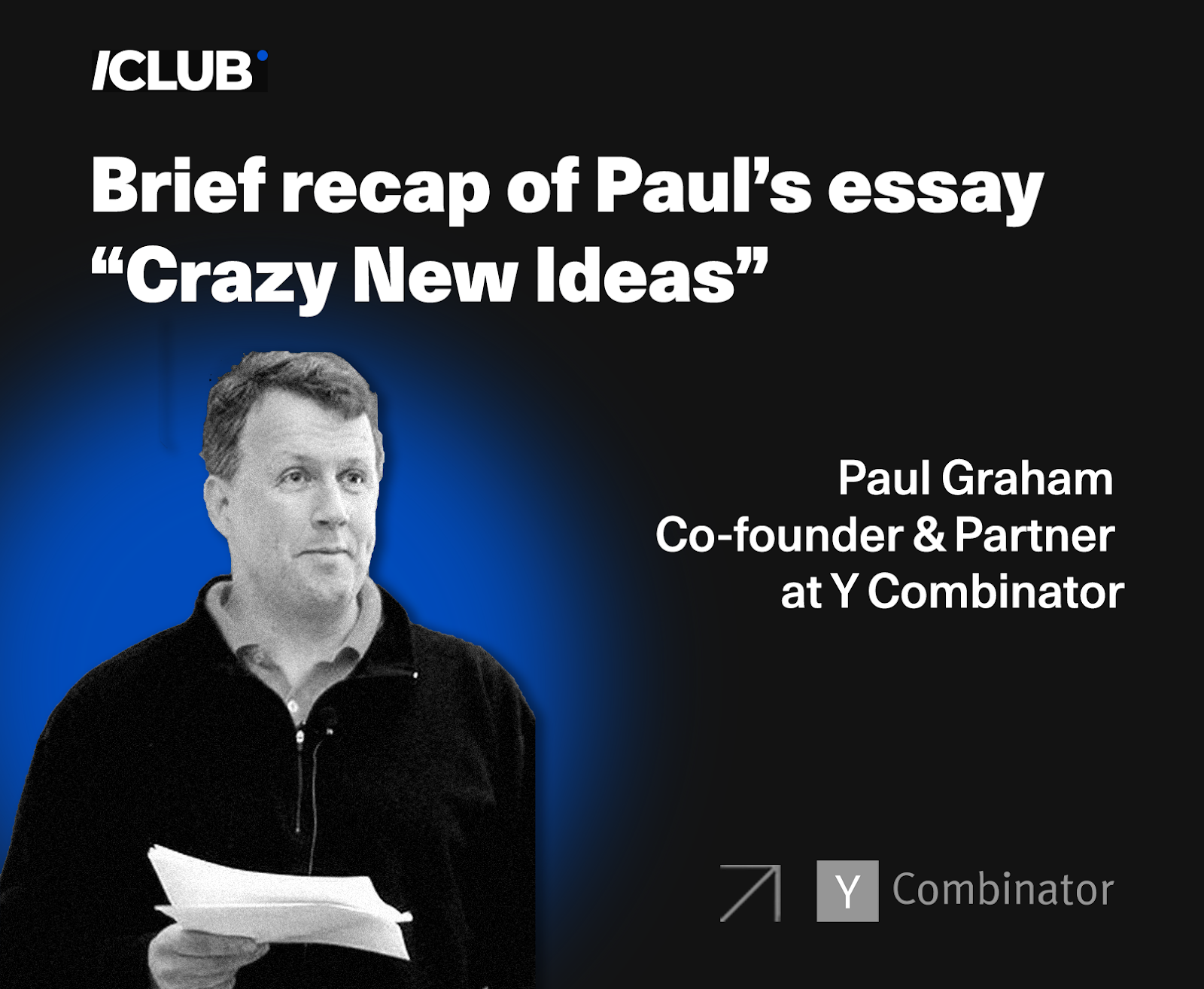
And you might also know how sometimes a friend's crazy idea that everyone dismisses, gradually takes over the world. Paul Graham shared a few thoughts about crazy new ideas in his blog (http://www.paulgraham.com/newideas.html).
Here's a brief recap of his essay, so you could revise it time-to-time:
1. Don't focus only on ideas. Focus also on people who proposed them to you.
Most crazy ideas are not valid and could be safely dismissed. However, if the ideas was proposed by an industry expert, then probably they know something you don't.
2. The wise response to such an idea is not to make statements, but to ask questions.
Paul explains it this way: 'Why has this smart and reasonable person proposed an idea that seems so wrong? Are they mistaken, or are you? One of you has to be. If you're the mistaken one, that would be good to know, because it means there's a hole in your model of the world. But even if they're mistaken, it should be interesting to learn why. A trap that an expert falls into is one you have to worry about too.'
3. The main thing that leads reasonable people to dismiss new ideas is the existing paradigm.
Paul Graham mentions a lot of reasons for dismissing ideas like enviousness, making yourself sophisticated, or having a vested interest in existing ideas. But the most important one is Paradigm.
They make our standards of new ideas impossibly high, as the current one seems to be too perfect. Paul gives a great example with Copernicus heliocentric model that was published in 1543 but accepted only after the 1640s.
Avoid saying 'It won't work.' Analyze not only the idea but the author as well. Go deeper into the reasons of an idea evolving and look for a reasonable domain expert proposing something that sounds wrong.
http://www.paulgraham.com/newideas.html#f2n
Of course, having a domain expert in the hood won't guarantee the excellence of the idea. Paul thinks it shouldn't.' They just have to be sufficiently good bets — to have sufficiently high expected value. And I think on average they do. I think if you bet on the entire set of implausible-sounding ideas proposed by reasonable domain experts, you'd end up net ahead.'.